Areas of Special Concern for Mold in Medical Facilities
The combination of snow, ice, freezing temperatures, and the high indoor humidity required for patient comfort creates a “perfect storm” for hidden water damage and mold growth in medical facilities.
Unlike summer storms, winter threats are often hidden — happening inside walls, above ceilings, and below floors.
Use this checklist to guide your team’s visual inspections during the winter months to catch issues before they become major compliance and patient safety risks.
1. The “Hidden Burst” Hotspots (Freezing Pipe Risk)
Heavy snow and ice can freeze insulation and trap heat, but sudden thaws or temperature drops cause pipes to burst in unexpected places.
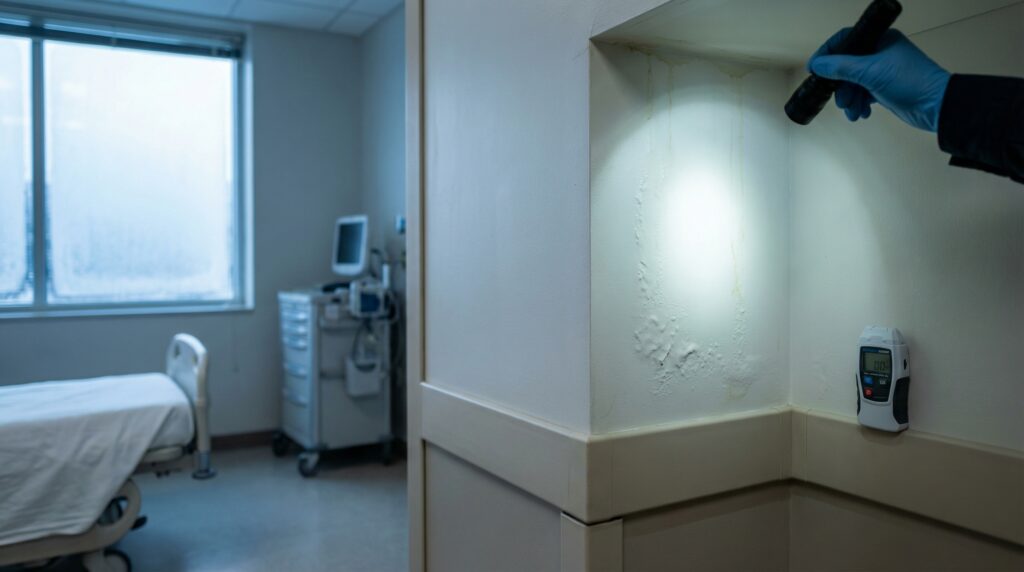
- Perimeter Rooms & Patient Rooms: Check corner rooms and areas near un-insulated exterior walls. Look for new bubbling or cracking paint, which indicates water behind the wall.
- Ceiling Tiles Under Roof Vents: Ice dams can force water back under shingles and into the ceiling cavity. Inspect ceiling tiles directly below roof valleys and vents for new yellow or brown staining.
- Sprinkler Systems: Look for corrosion or small pinhole leaks at pipe joints in sprinkler systems, especially in unheated attics or parking garages.
- Mechanical Penthouses: Ensure these areas are staying above freezing. A failed heater here can cascade water down through multiple floors.
2. Entryway & Loading Dock Management (Snow/Water Intrusion)
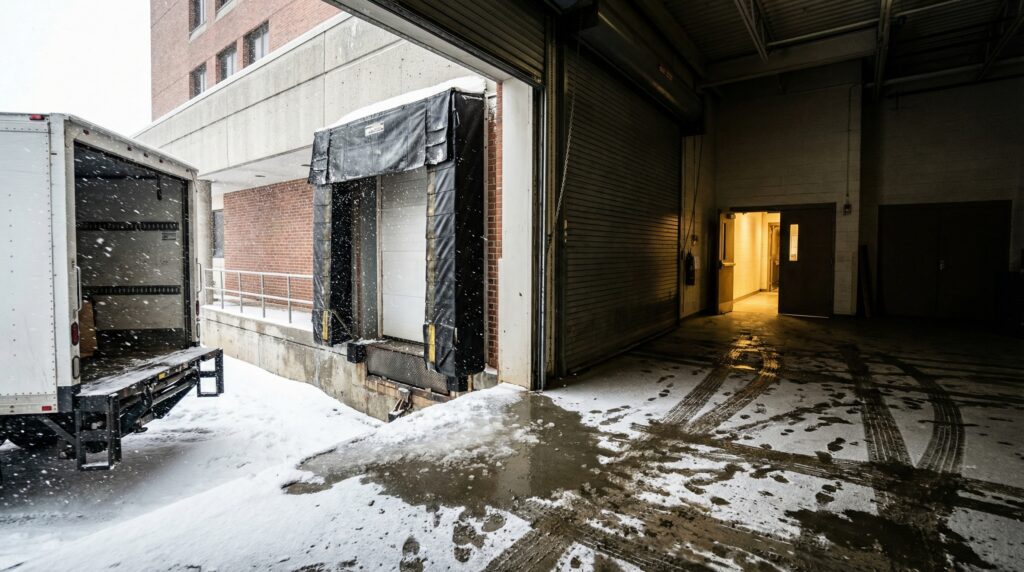
Hospital traffic is constant. Snow is trampled in, melts, and creates moisture sinks.
- Dock Seals & Levelers: Inspect loading dock seals. If trucks are compressing damaged seals then warm, moist air escapes and cold air enters. If seals are broken, snow and rain are blowing in and pooling on the dock floor, seeping into the building joint.
- Floor Grout & Tile Adhesive: In high-traffic entry lobbies, the constant freeze/thaw cycle of melted snow can break down grout. Check for loose tiles where water can pool underneath.
- Entry Mat Systems: Verify that walk-off matts are long enough (ideally 15-20 feet) to allow snow and slush to be removed from shoes/boots before hitting carpet or hard flooring.

3. HVAC & Humidity Control (The Condensation Factor)
Winter air is dry, but the air inside a hospital is humid. When these two meet, condensation (and therefore mold food) appears.
- Thermal Bridging: Walk the facility with an infrared thermometer (or just a hand). Look for cold spots on metal door frames or window frames where condensation forms. If those spots are wet, mold is next.
- Fresh Air Intakes: Inspect louvers and intakes. Are they blocked by snow? If airflow is restricted, it can cause pressure imbalances and suck moist air from bathrooms into patient areas.
- Humidification Systems: Check for standing water or mineral deposits around in-duct humidifiers. If they aren’t draining properly, they are actively adding moisture to the HVAC system.
4. Infiltration Points (The “Freeze/Thaw” Cycle)
Water expands by 9% when it freezes. This expansion widens cracks.
- Exterior Wall Penetrations: Check where pipes, conduits, or cables enter the building. The freeze/thaw cycle can open up these seals. Look for brown streaks running down the inside of the wall below these points.
- Window Glazing & Seals: On windy, cold days, hold a tissue near window frames. If it flutters, air is moving. If air is moving, moisture is moving. Check sills for dampness.
- Roof Membrane: While snow covers the roof, look for large icicles hanging from the roof edge. Icicles usually mean the roof is losing heat and melting snow, which can indicate poor insulation and potential for ice dam leaks.
5. Immediate Response Protocol (The “24-Hour” Rule)
If you find any of the above during your rounds, remember the golden rule of winter mold prevention:
“Any damp or wet building materials must be dried within 24-48 hours to prevent mold growth.”
If you discover a burst pipe or a leak:
- Extract standing water immediately.
- Remove wet ceiling tiles, carpets, and insulation. (These are nearly impossible to dry out in a cold environment).
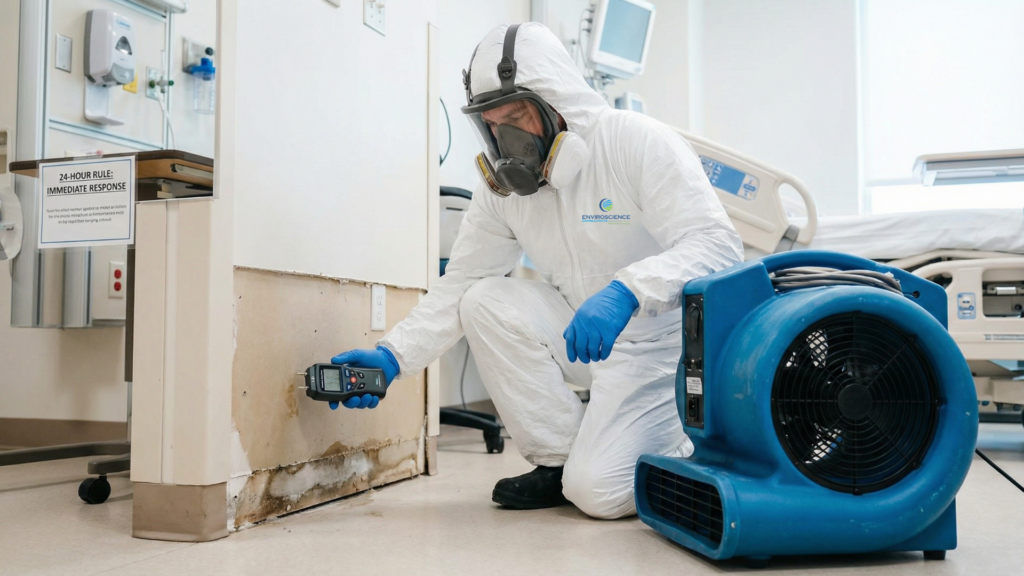
- Call Enviroscience. If the material has been wet for an unknown period, or if the water may have traveled into a wall cavity, a licensed Mold Assessor should perform a visual inspection and moisture mapping to ensure the wall is dry before it is sealed back up.
Environmental News, Resources and Insights
News, updates, resources and important information from the Envrioscience team with over 80 years of combined experience. Join our mailing list below to be receive the latest updates directly to your inbox.
Areas of Special Concern for Mold in Medical Facilities
Read More
ACP5 or ACP7? Let’s Untangle the Acronyms Together
Read More
Eric M. Hofmeister Joins Enviroscience Consultants
Read More
The Use of Spore Traps in Assessing Airborne Microbial Levels
Read More
Annual Asbestos Awareness Training
Read More
Carbon Dioxide as a Ventilation Indicator
Read More
NYS Lead in Drinking Water in Schools Update
Read More
Testing Lead in Drinking Water Westchester, Rockland, Putnam, Nassau and Suffolk County School Districts, NY
Read More
Mold Investigation and Remediation Management – Hauppauge HS, Hauppauge, NY
Read More
Contaminated Soil Remediation Management – Harborfields Central School District, Greenlawn NY
Read More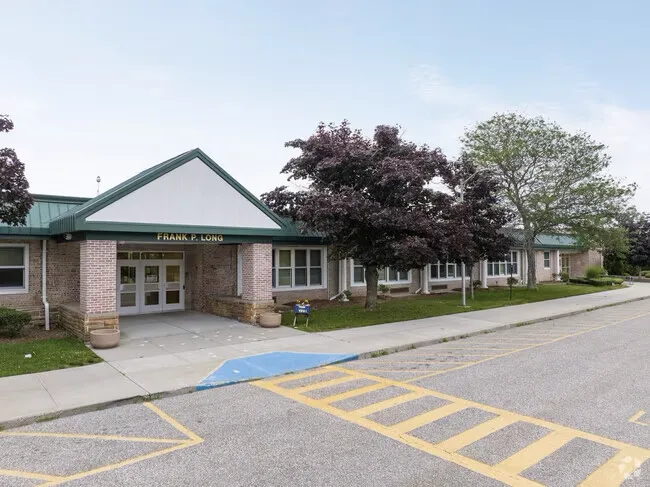
Risk Assessment and Air Quality Services – Frank P. Long Intermediate School, Bellport, NY
Read More